 Sante

A pouch can look right in a supplier’s photograph and still be awkward to fill, too tall for your shelf, or difficult to pack into a shipping carton. That is why choosing between a stand up pouch and a flat bottom pouch starts with your product and packing process.
Choose a conventional stand up pouch when you want a flexible pack with a simple front-and-back layout. Consider a flat bottom pouch when a box-like shape, defined side panels, and a rectangular base would help your display or handling. Both need the right size, material, and seal to work well.
This guide compares the two formats for buyers ordering snacks, coffee, tea, powders, and other dry products.
What is the difference between the two pouch types?
A conventional stand up pouch, often called a doypack, has a folded bottom gusset that opens as the bag is filled. The front and back are joined by side seals. The filled pouch usually has a softer, more rounded footprint.
Un flat bottom pouch, also called a box pouch, has a distinct flat base and expandable side gussets. These give it a more box-like shape and defined front, back, and side panels.
Names can overlap: a supplier may call a box pouch a “flat bottom stand up pouch” because it also stands upright. Send a reference photo and ask for a drawing. The construction matters more than the name in a quotation.
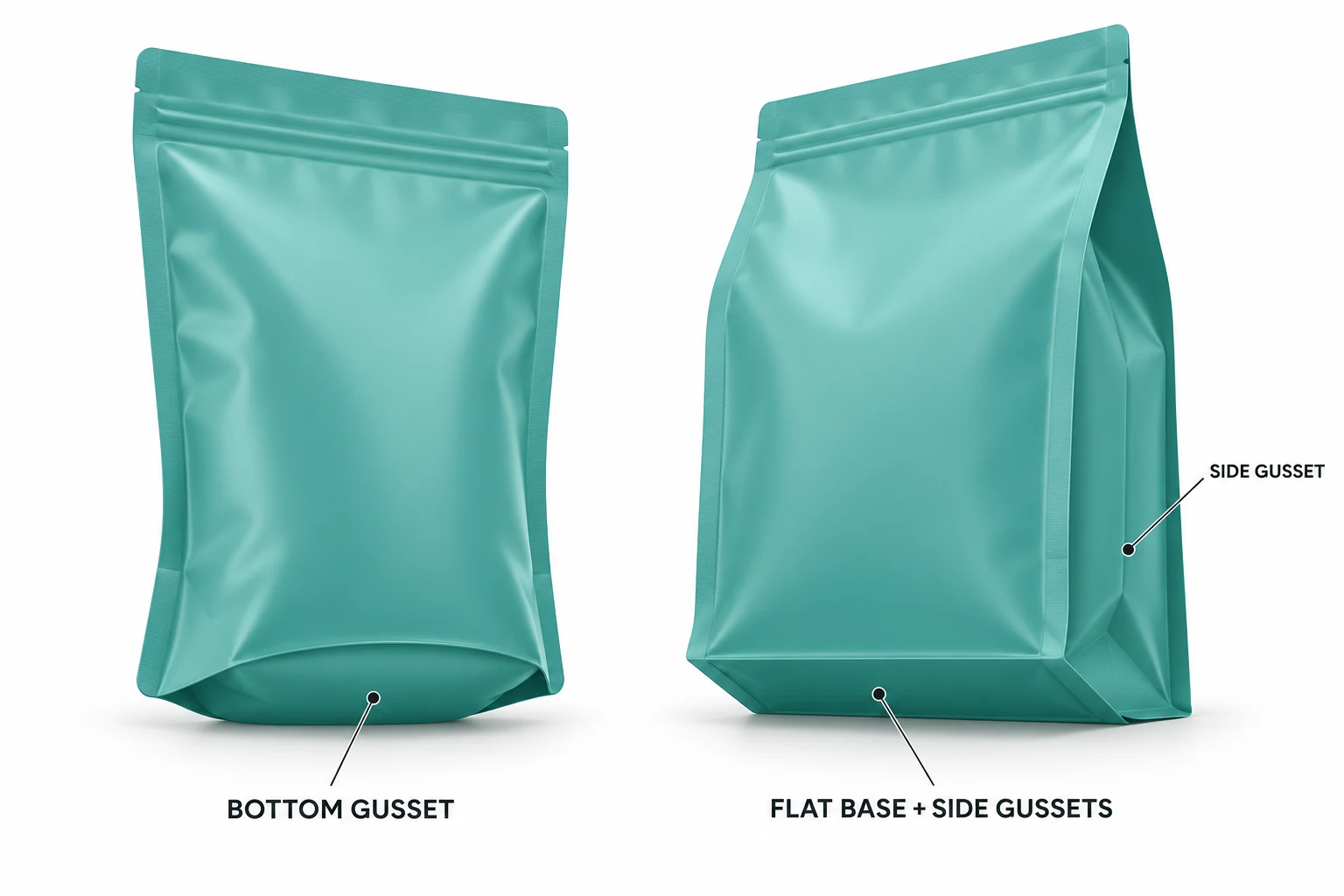
Stand up pouch vs flat bottom pouch: quick comparison
| What to compare | Conventional stand up pouch | Flat bottom pouch |
|---|---|---|
| Construction | Front and back panels with an expanding bottom gusset | Flat base with expanding side gussets |
| Filled appearance | Softer outline with a curved base | More defined, box-like outline |
| Artwork planning | Mainly front and back; check the bottom fold | Front, back, and side panels; check folds and seals |
| Standing performance | Check at the actual fill level | Check at the actual fill level |
| Product protection | Depends on the film structure and seals | Depends on the film structure and seals |
| Price comparison | Compare matched specifications, quantities, and delivery terms | |
Four questions to answer before choosing
1. How does your product fill the pouch?
Start with the actual product and target net weight. Coffee beans, ground coffee, and loose tea take up different amounts of space, even at the same weight. A “250 g bag” is a starting point for discussion, not a capacity guarantee for every product.
Ask for samples in both formats that fit your intended fill. Two pouches with the same stated width and height may have different usable volumes because their gussets, seals, and zipper positions differ. Confirm whether the quoted dimensions are external measurements and whether a gusset measurement means its full opened depth.
2. Where will customers see the pack?
For a shop shelf, check the filled pouch at the shelf’s actual height and depth. Is the front label readable? Does the pouch stand without leaning on its neighbour? If shoppers see the side first, a flat bottom pouch gives you a defined side panel to design.
For online orders, pack samples into your real shipping carton. A neat rectangular pouch does not automatically mean a lower freight bill. Count the packs per carton, measure the filled carton, and check whether the arrangement protects the product.
3. Can your packing process handle it?
During a hand-filling trial, check whether the opening accepts your scoop or funnel and whether the pouch stays open conveniently. If a co-packer or automatic line will fill it, get approval for the pouch dimensions, opening, zipper position, and gripping area before placing the order.
Leave enough room for the planned heat seal without trapping product in the sealing area. A resealable zipper is useful after opening, but it does not replace the initial heat seal where your packaging system requires one.
4. What protection does the product need?
Pouch shape alone does not tell you how well it keeps out oxygen, moisture, or light. Ask the supplier to recommend a film structure for your product, intended storage conditions, and shelf-life target. Where protection is critical, request relevant barrier data and validate the complete pack.
A thicker or more rigid pouch is not automatically a better barrier. Likewise, a paper-look surface does not tell you what the inner layers are made from. For appearance options, see our guide to clear, window, and opaque stand up pouches.
How to compare samples before you order
A useful sample trial answers more than “does it fit?” Use the same product batch and target weight for both formats, then follow the same checks.
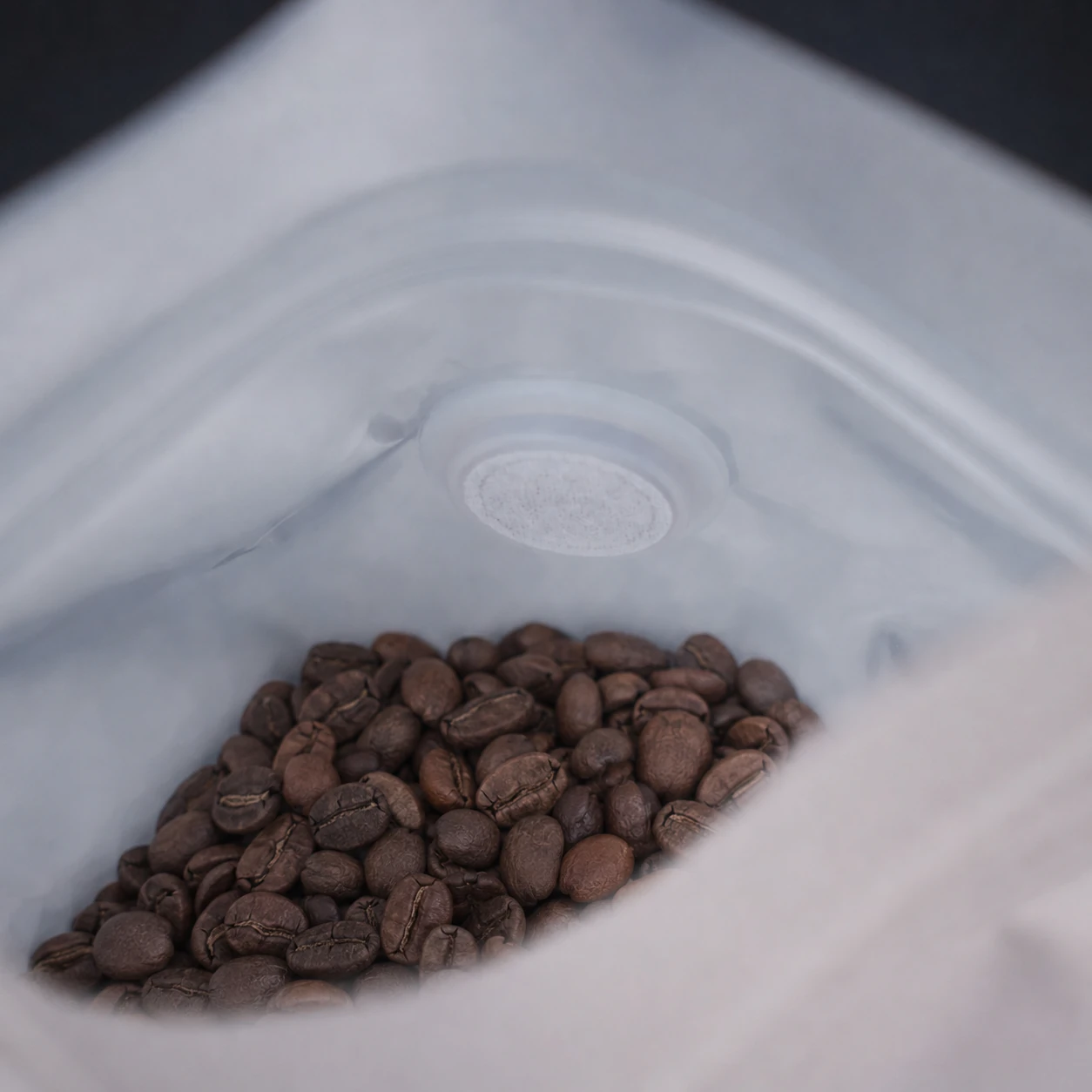
- Fill and weigh. Check that each sample holds the target quantity with enough free space for closing and sealing. Record the pouch size and product weight.
- Close and seal. Check zipper access and use sealing settings recommended for the actual film. Inspect the seal for trapped product, folds, and uneven areas. A visual check alone does not prove seal strength.
- Stand and handle. Place the filled pack on a level surface, pick it up, and put it down several times. Repeat after removing some product if it is a multi-use pack.
- Check presentation. Use a simple printed label or paper artwork mock-up. Keep important text away from seals, folds, and the zipper area.
- Pack the carton. Record how many finished packs fit, their orientation, and any pressure on seams or product. For fragile products or demanding shipping routes, arrange an appropriate transport trial.
Example: if you sell 250 g of whole-bean coffee, request a suitable sample of each format rather than two bags with identical outside dimensions. Fill both to 250 g, seal them, and compare the finished packs in your retail display and shipping carton. If a degassing valve is needed, specify it separately; neither pouch shape provides that function by itself.
Compare the complete quotation, not just the bag price
A price difference is difficult to judge if one quote includes a zipper, a different film, or a larger print area. Ask both suppliers to quote against one written brief:
- Product, target fill weight, and intended storage conditions
- Agreed pouch drawing and dimensions, including gussets
- Film structure, thickness, finish, and product-contact requirements
- Zipper type, tear notches, valve, or other necessary features
- Artwork coverage, number of designs, and quantity per design
- Setup charges, sample approval, lead time, carton packing, and delivery terms
Request a price for each format at the same order quantity. There is no reliable universal percentage by which one should cost more. The useful comparison is the cost of a pack that fills, seals, protects, and ships as required.
Questions buyers often ask
Is a flat bottom pouch always more stable?
Its defined base can help it stand, but the result still depends on dimensions, material stiffness, fill level, and product distribution. Check filled samples instead of judging an empty bag.
Which format keeps food fresh for longer?
Neither shape guarantees a longer shelf life. The film barrier, seal quality, product condition, and storage environment determine whether the complete pack meets your target.
Can both formats have a zipper?
Oui. Confirm the available zipper construction and its position with the supplier, then check how easy it is to fill, open, pour from, and reclose the sample.
Which should a new brand order first?
Trial the format that suits your filling process and budget, then compare the alternative if its display or handling benefits matter to your sales channel. Approve a filled and sealed sample before committing to custom printing.
Need help narrowing down the options?
Send Sante Packaging your product details, target fill weight, order quantity, and a reference photo. Tell us whether you fill by hand or use a packing line, and which features you need. Request suitable pouch options and a quotation so the size, material, and format can be discussed together.
Technical references: Flexico bag-format and film-selection catalogue; PAC Worldwide flexible pouch product sheet. Construction diagrams are AI-generated illustrations; the coffee-pouch interior is a product photograph.