 Sante

When buying stand-up pouches for the first time, you may start by comparing how clear, window, and opaque bags look. Choosing the right pouch also means thinking about how to display your product, how it needs to be stored, and how you plan to sell it. Explain these needs first, then compare samples and quotes to find a suitable option.
None of these three styles is the best choice for every product. Start by narrowing your options based on how you want to display and use the packaging. Then ask your supplier to recommend materials and test samples with your product. Here are the main points to consider.
Understand the Three Pouch Styles
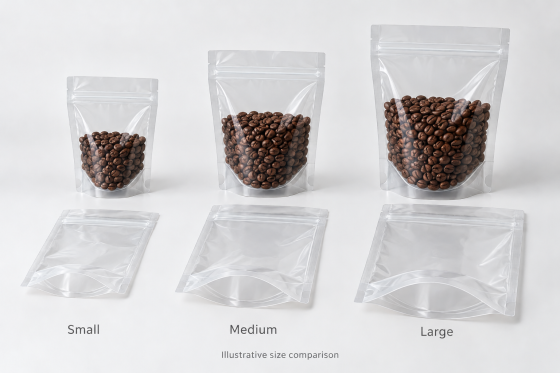
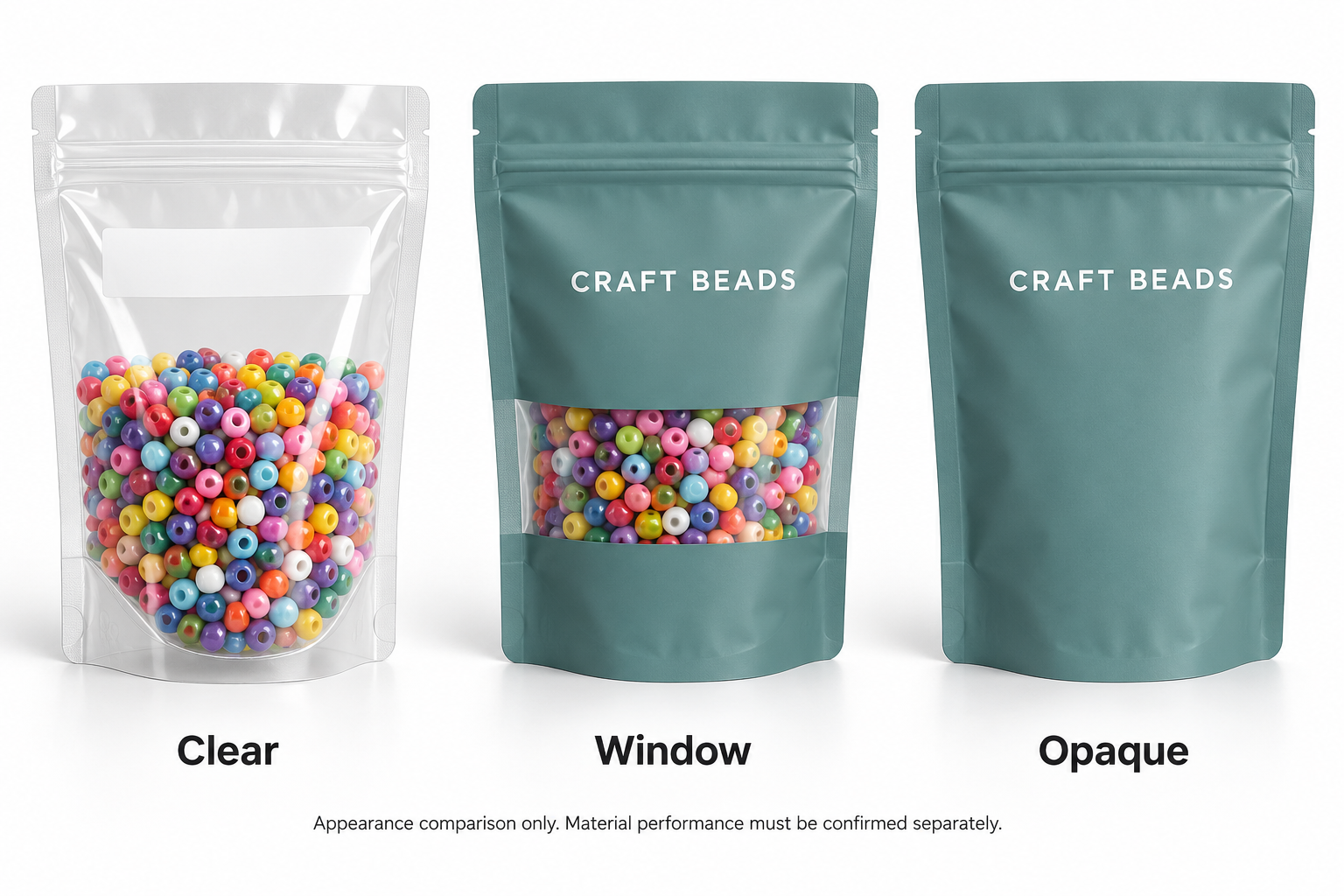
Clear stand-up pouches let customers see the product through a large part of the bag. Window pouches show the product through a smaller clear area, leaving the rest of the surface for branding and text. Opaque pouches hide the contents and use printed text and images to introduce the product.
A window is covered with clear film; it is not an open hole in the bag. These names mainly describe appearance. They do not tell you the material, thickness, or level of product protection.
Choose Clear Pouches to Show the Product
If your product’s color, shape, or design is a selling point, a clear pouch may be a good option. For example, customers buying colorful craft beads or small craft items can see the actual contents through the bag. This helps them understand what they are buying.
Clear pouches can also have labels or printing. Consider how well customers can see both the product and the text. Dark text over a dark product can be hard to read, while a large label may cover the area you want to display. Check the overall appearance with the product inside.
Also look at how the contents sit in the bag. Some products settle at the bottom. Others leave crumbs or powder on the inside of the film. Photos of empty pouches will not show these effects, so testing your own product gives you a better idea of the result.
The fill amount also affects the display. An overfilled bag may crowd the contents, while an underfilled bag may look too empty. Use the amount you plan to sell, then check whether the pouch stands naturally and closes and seals properly.
If normal variations in product size or color occur between batches, consider how these will look through a clear pouch. Compare a few representative samples rather than making your decision using only the best-looking one.
Choose Window Pouches to Show Part of the Product
A window pouch is worth considering if you want customers to see the product while keeping more space for branding and information. The clear area shows part of the contents, and the rest of the bag can carry the product name, graphics, pack size, and instructions.
Decide what you want customers to see before choosing the window’s shape and size. To show the color or appearance of small pieces, position the window where the product collects. To show the main shape of a craft item, consider how it will sit inside the bag.
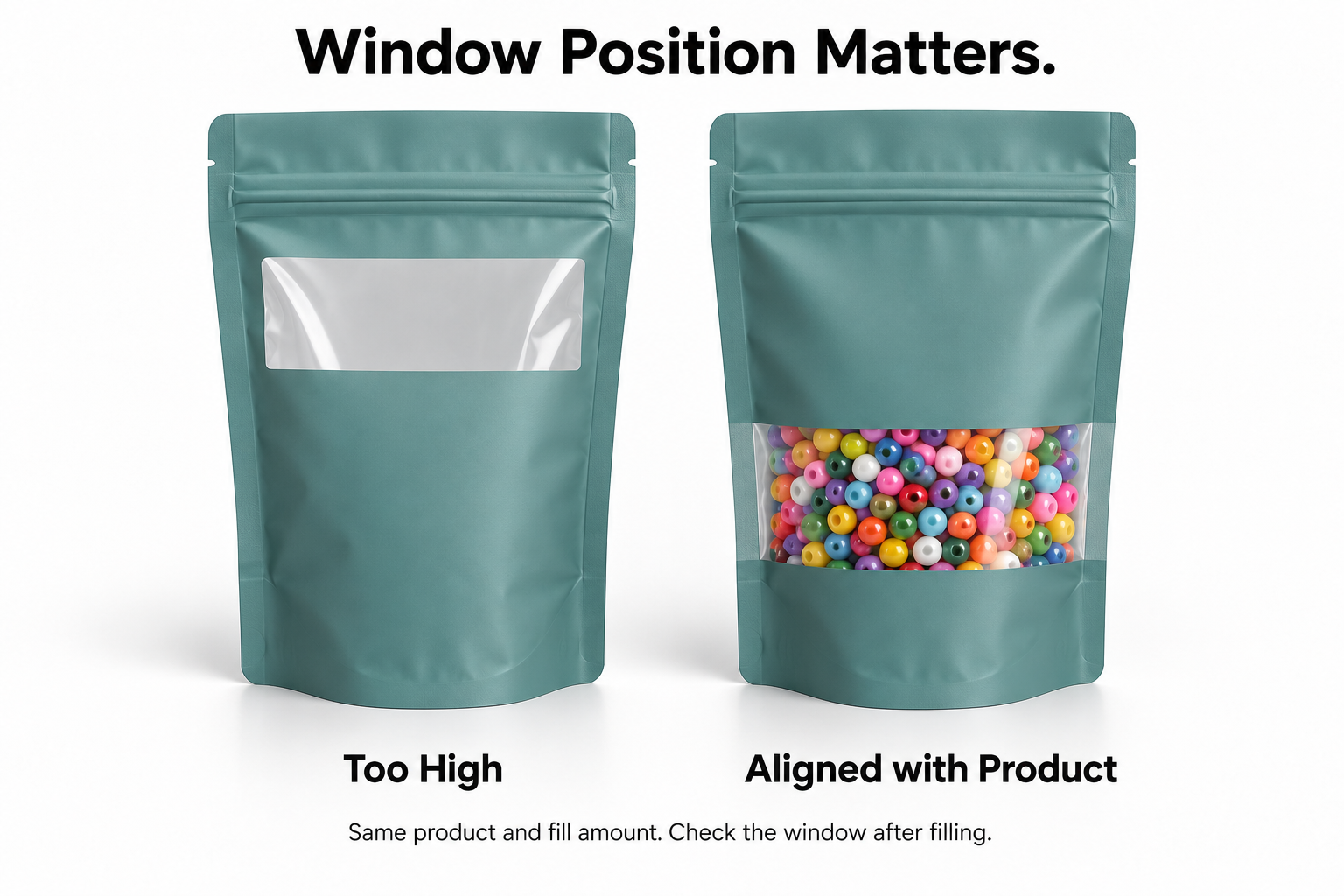
Check the window position carefully. If it is too high and the product only fills half the bag, customers may mainly see empty space. If it is near the bottom, check whether the expanded base folds across the window or makes the product harder to see.
The window also affects the space available for your design. Show the window, brand name, and key text together on the artwork, then compare it with a filled sample. Confirm the display before finalizing the dimensions instead of relying only on a mockup of an empty bag.
If several products will use the same window pouch, test each one separately. Different shapes and positions inside the bag can change what customers see through the same window. Testing one product is not enough to confirm the whole order.
Choose Opaque Pouches to Focus on Branding
An opaque pouch may suit your needs if customers will learn about the product from its name, images, and description, and you do not need to show the actual contents. The bag surface gives you room to develop your brand design and keep a consistent look across a product range.
For a range with several flavors or models, different colors, names, and images can help customers tell the products apart. Make these differences easy to recognize, and use product images that accurately represent the contents.
Opaque pouches are available in different material structures, and not all contain aluminum foil. If your product needs protection from light, explain this to your supplier and confirm the material specification. A black, white, or silver appearance alone does not prove that a pouch meets your protection requirements.
Confirm Appearance and Material Performance Separately
Moisture, oxygen, and light protection are different requirements. In simple terms, they concern how water vapor, oxygen, and light affect your product. All three pouch styles need to be assessed using their actual materials. You cannot rank their protection simply by how transparent they look.
Some clear packaging films can provide a high oxygen barrier. If you want to display your product, ask your supplier whether a suitable clear material is available. The clear area of a window pouch also needs to be assessed. A small window does not automatically mean the bag meets your light-protection needs.
As a first-time buyer, you do not need to memorize a long list of material names. Explain what your product is, how long you want to store it, the storage conditions, and any previous problems such as moisture damage or color changes. Share any existing material specifications or packaging requirements as well.
After your supplier recommends a material, ask which needs it is intended to address and what supporting information is available. A good-looking sample can help you confirm the display. The actual shelf life still needs to be validated with your product, the finished packaging, and the intended storage conditions.
Test How the Samples Work in Practice
When comparing samples, use the same product and fill amount wherever possible. First check whether the contents are displayed clearly and the brand text is easy to read. For retail sales, stand the samples on a shelf. For online sales, take front and side photos of the filled bags and check how they look in the images.
Seguinte, check whether filling and sealing are straightforward and whether features such as the zipper meet your needs. If you use specific filling equipment, confirm its requirements too. If the sample has different materials or features from the final order, ask what the sample is intended to confirm.
When comparing quotes, clearly list the dimensions, material requirements, impressão, quantity, and features. Compare the price of clear, window, and opaque pouches using specific, comparable specifications. If two quotes cover different requirements, unit price alone will not tell you which offers better value.
Prepare Your Requirements Before Requesting a Quote
Before contacting a supplier, prepare product photos, the fill amount per bag, storage requirements, and the quantity you expect to order. If you have a preferred packaging style, include reference images and explain what you like: the clear display, the window position, or the overall graphics.
If you already use packaging, take photos of both the empty bag and the filled pack. Explain what works and what you would like to change. For example, you may want to show more of the product or make the brand name easier to notice. These details help the supplier understand your needs.
If you are unsure, ask your supplier to suggest two suitable options. Compare the samples, preço, minimum order quantity, and delivery time. Once you choose an option, confirm the dimensions, material, window, and print artwork on the drawing, and keep the sample approved by both sides.
If you are choosing stand-up pouches, you can send us this information. We have years of experience in plastic packaging. If you are unsure which style to choose, we can recommend suitable options based on your needs and provide free samples to help you confirm the final solution.