 Sante Group

Two stand up pouches can look almost identical and still protect your product very differently. One may suit a short sales cycle, while another needs a different film structure for a longer storage period or a more demanding journey.
Choose stand up pouch materials by starting with your product, storage conditions, filling process, and target shelf life. Then compare the proposed structure and test a finished sample. Colour, толщина, and a silver-looking lining are useful observations, but they do not tell the whole story.
This guide explains the main choices in plain English, so you can have a useful conversation with a packaging supplier even if you have never ordered custom pouches before.
1. Start with what your product needs
Before asking for “the best material,” describe what goes inside the pouch. Be specific: roasted whole coffee beans, fine spice powder, soft dried fruit, and metal craft parts need different discussions.
For a first enquiry, prepare these details:
- Product and fill weight: include a photograph or a small sample where practical.
- Storage target: explain how long you hope to sell and store the unopened product.
- Conditions: mention warm warehouses, humid climates, chilled storage, or long transport.
- Filling process: say whether you fill by hand, use a packing line, or work with a co-packer.
- Special features: include a window, zipper, valve, or other required fitments.
You do not need to choose every layer yourself. Your job is to explain the application clearly and ask why the recommended structure suits it. A shelf-life target is a design requirement to validate, rather than a guarantee that follows from a material name.
2. Understand the jobs of the different layers
Many stand up pouches combine materials so that different parts of the structure do different jobs. A quotation might show names such as PET/PE, PET/METPET/PE, or PET/AL/PE. These are descriptions to clarify with the supplier, not performance ratings.
| Function | What it means for a buyer |
|---|---|
| Outer surface and print support | Helps deliver the intended appearance, печать, handling, and feel. |
| Barrier function | Helps control the passage of oxygen or water vapour. Light protection must also be considered when relevant. |
| Inner sealing surface | Contacts the product and forms the heat seal. Product compatibility and sealing conditions matter. |
These are functions, not a rule that every pouch has exactly three layers. Ask for the complete proposed structure, the total thickness, and any relevant performance information. Confirm how the supplier lists the layers, usually from outside to inside.
3. Compare common material options
Clear film structures
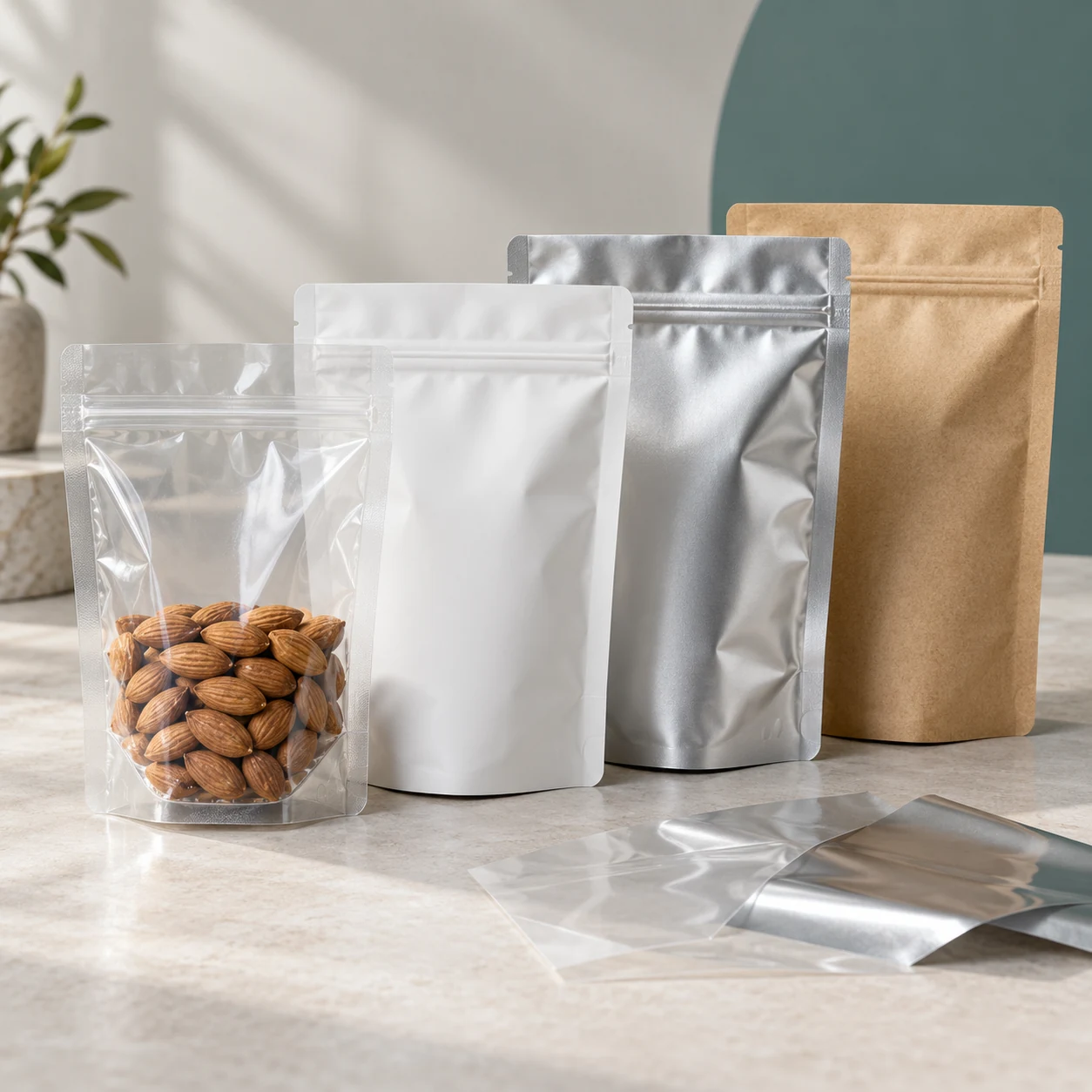
A clear pouch lets shoppers see the product. It can be useful when colour, shape, or texture helps the buying decision. Однако, “clear” describes visibility, rather than one specific material.
Clear structures can have different barrier properties, including options designed for stronger oxygen protection. Ask what protection the proposed clear film provides. If the product is sensitive to light, also discuss whether a clear pack or window is appropriate.
Metallised film structures
Metallised film has a thin metal coating on a plastic film. It is used in many flexible packaging structures where product protection and a metallic appearance are useful.
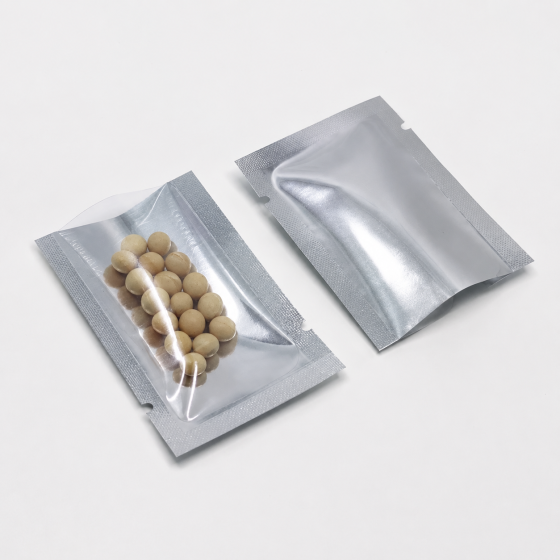
Do not approve it simply because the inside looks silver. Ask for the exact structure and the relevant barrier data. Two silver-looking pouches can use different films and coatings.
Aluminium foil structures
A foil laminate includes an aluminium foil layer. It can be considered when strong protection against light, кислород, and moisture is required. It is different from a metallised plastic film, even though the two may look similar.
The finished pouch still needs sound folds, seals, and handling. A good foil specification does not remove the need to test the complete package, especially after filling and transport.
Kraft-look pouches
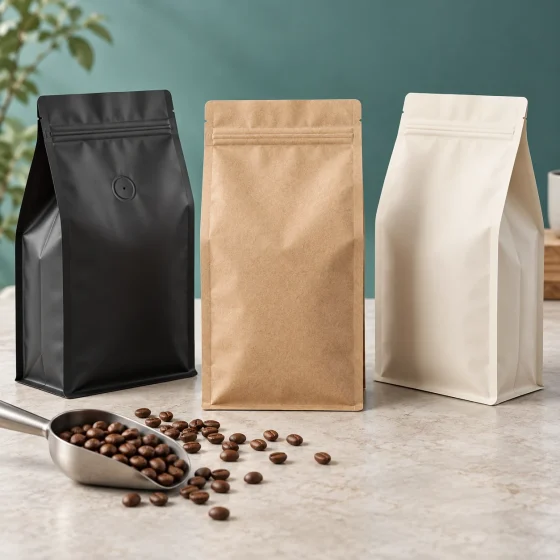
A brown paper appearance can suit a natural or simple brand design. But the visible paper surface does not tell you what is inside the structure. Ask what provides the product-contact surface, the heat seal, and any required barrier.
Also ask how the complete pouch should be disposed of in your sales market. A paper appearance alone does not establish recyclability or compostability.
PE-based structures
If a PE-based design is important to your packaging plan, explain that at the start. Ask the supplier to confirm the complete construction, including coatings, adhesives, застежки-молнии, and any barrier components.
Check whether the finished pouch meets the collection and recycling requirements relevant to your market. Avoid making an environmental claim from the words “PE” or “mono-material” alone.
4. Ask two simple questions about barrier performance
How much oxygen passes through? How much moisture passes through? The specification may call these OTR, meaning oxygen transmission rate, and WVTR, meaning water vapour transmission rate.
For the same units and test conditions, a lower number means less passes through. When comparing quotations, ask for the temperature, humidity, units, and test method alongside the values. A number without those details is difficult to compare fairly.
You do not need to set a technical target by guesswork. Explain your product and storage goal, then ask the supplier or a packaging testing specialist what level of protection needs to be demonstrated. There is no single barrier value that suits every snack, кофе, powder, or non-food product.
5. Do not choose by thickness alone
Thickness influences how a pouch feels and behaves, but it is only one part of the specification. For example, two pouches with the same total thickness can have different layer combinations, sealing behaviour, and barrier performance.
Check how the thickness is stated. Is the quotation describing one wall of the pouch or the combined front and back? Are the units microns or mils? A US mil means one-thousandth of an inch, rather than one millimetre. Confirm the nominal thickness and tolerance before comparing prices.
Then test the physical sample with your actual fill. Look for problems such as sharp product edges stressing the film, a pack that feels too floppy, or an opening that makes filling difficult. A thicker pouch will not automatically solve every one of these issues.
6. Test the finished pouch before a production order
Material data is useful, but your customer receives a filled, sealed package. The seals, folds, closures, and the way the pouch is handled all contribute to the result. AMETEK MOCON’s guidance on testing the whole package explains why flat-film results alone may not predict finished-package performance.
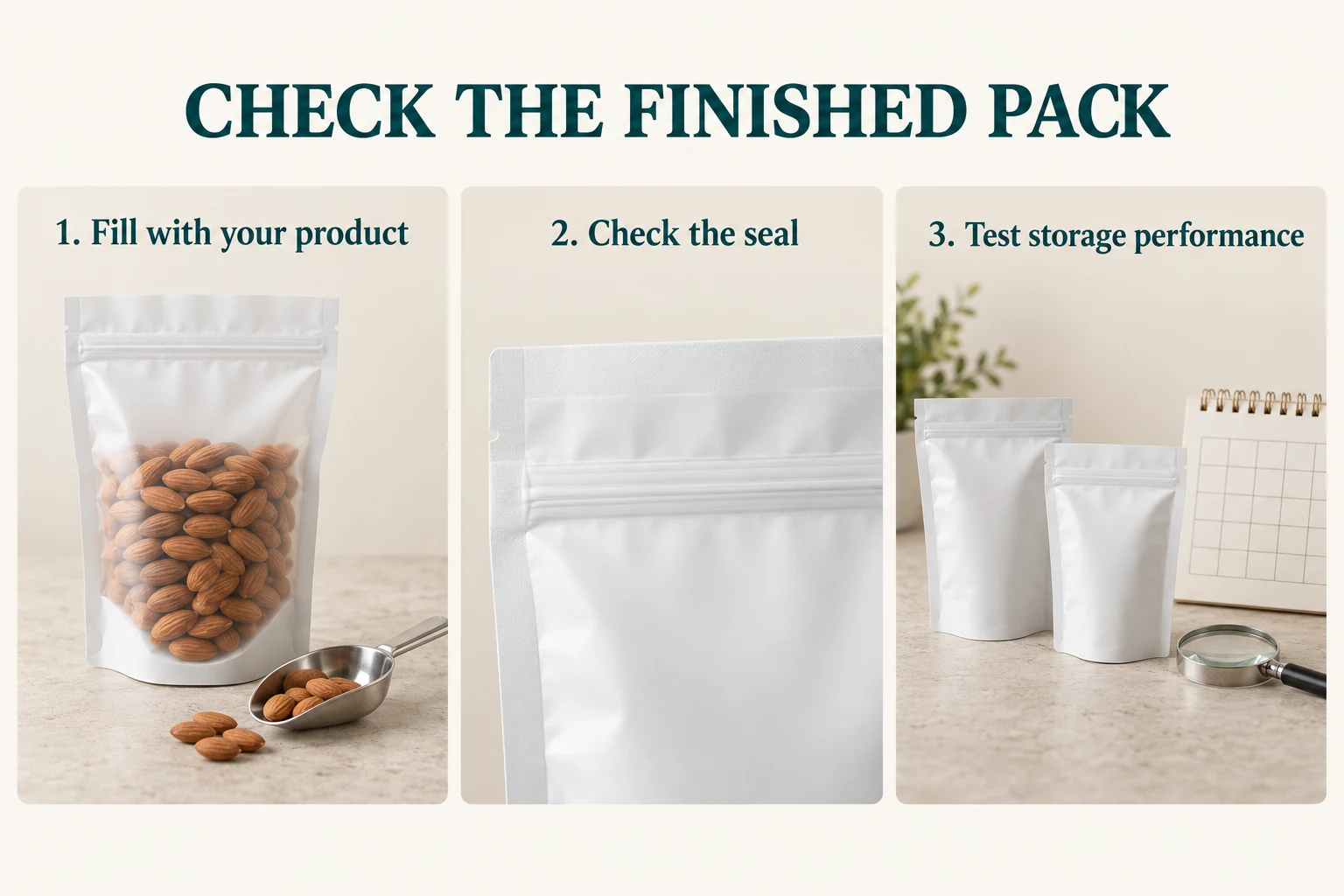
- Fill a representative sample. Use the intended product, net weight, and packing method. Check the space needed above the product for closing and sealing.
- Confirm sealing conditions. Trial the pouch on the planned equipment with the supplier’s recommended starting settings. Keep the sealing area free of trapped product.
- Check handling. Pack samples into the planned shipping carton and inspect them after a representative handling trial.
- Validate storage performance. Arrange an appropriate test plan for the product and target conditions. A pouch that looks fine after a few days has not demonstrated a long shelf life.
For food applications, request documentation appropriate to the actual material, intended food contact, process, and destination market. Avoid relying on a general “food-grade” description without checking what it covers.
What should you send when requesting a quotation?
A useful enquiry could read:
We need custom stand up pouches for roasted nuts, with a target fill of 250 глин. We fill by hand and heat seal the top. Our target unopened shelf life is six months in a warm, humid market. Please recommend a suitable structure, explain the thickness measurement, and provide samples and available barrier data. We would also like to compare clear-window and fully opaque options.
This is an example brief, not a material recommendation for all nuts. Add your order quantity, number of designs, delivery destination, and intended launch date so the supplier can prepare a more useful quotation.
Frequently asked questions
Can a clear pouch provide a good barrier?
Да, clear films with barrier features are available. Confirm the particular structure and its data, then decide whether light exposure is acceptable for your product.
Is a silver pouch always an aluminium foil pouch?
Нет. The appearance may come from metallised film, a foil layer, or another design choice. Ask the supplier to identify the actual layers.
Can the supplier guarantee shelf life from the material name?
A material name alone is not enough. Shelf life also depends on the product, packing process, seal quality, storage conditions, and other factors. Agree on the validation needed for your application.
Discuss your pouch specification with Sante Packaging
Send Sante Packaging your product details, fill weight, storage goal, and order quantity to discuss custom stand up pouch options. A reference photograph or existing sample is also useful.
Still planning the pack? Our guides explain how to choose a pouch size, clear, window, and opaque designs, and why zipper pouches may also need heat sealing. When you are ready, send your requirements for a quotation.