 Groupe Santé

A custom pouch sample can look excellent on a desk and still cause problems when you fill, seal or ship it. Before placing a bulk order, check how the bag works with your actual product, not just how it looks.
Start with three questions: Does the product fit? Can your team fill and close the pouch reliably? Does the finished pack match the specification you intend to order? This guide gives first-time packaging buyers a practical way to review samples and communicate changes clearly.
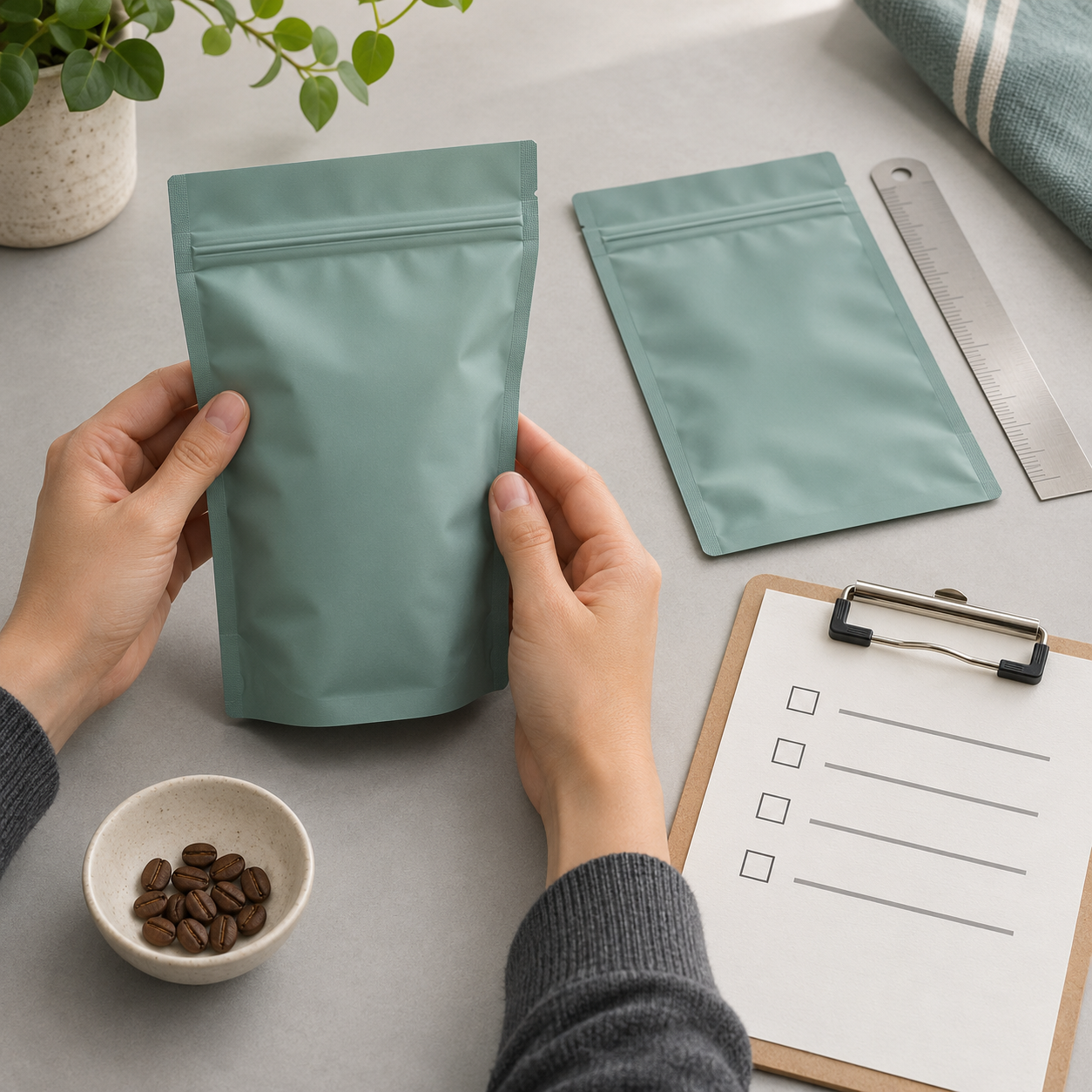
First, find out what kind of sample you have
Not every sample represents the final production bag. Ask the supplier what it is intended to demonstrate and which details will change.
- A stock sample can help you compare general shapes and features. Its dimensions or material may differ from your proposed order.
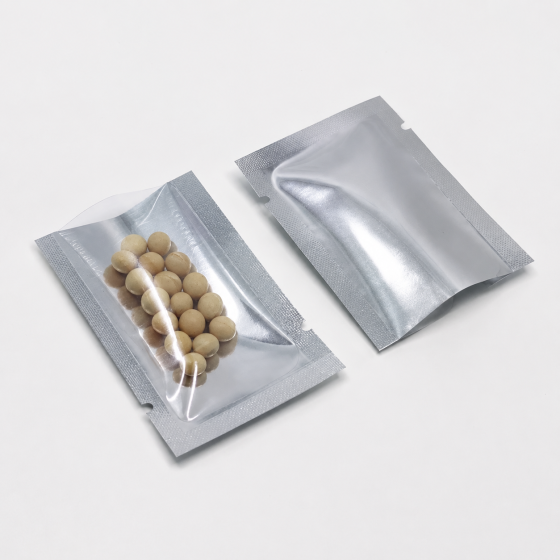
- A blank size sample can help with product fit and handling. Confirm whether its film and closures match the proposed specification.
- An artwork proof helps check text and layout. A picture or PDF cannot demonstrate seal performance or the feel of the finished film.
- A custom printed sample gives a closer view of the design, but ask whether the printing method and construction represent bulk production.
Write down any differences before testing. Autrement, you might approve the appearance of one sample while expecting the performance of another.
1. Fill it with the product you actually sell
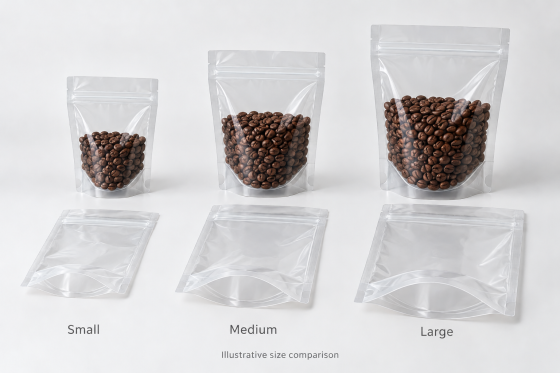
Use your intended filling quantity. Coffee beans, powders, dried fruit and small hardware parts occupy different amounts of space, even at the same weight. Filling a sample with a substitute can hide a sizing problem.
Check whether the opening is wide enough for your scoop, nozzle or filling machine. The product should fit without straining the bag, blocking the zipper or pushing into the final sealing area.
For liquids, use the intended product when assessing compatibility and longer-term performance. Water can help with a basic handling demonstration, but it does not establish suitability for a sauce, oil or cleaning formulation.
Record the actual fill quantity and take a front, side and top photo. If the bag is too tight, describe where space is missing rather than asking for “a slightly bigger bag.” For more on sizing, see our stand-up pouch size guide.
2. Compare dimensions with the approved drawing
Lay an empty sample flat without stretching it. Compare the outside width and height with the drawing, then check the gusset or base dimensions where applicable. Suppliers may describe gusset measurements differently, so confirm how they are defined.
The outside dimensions do not equal the usable filling space. Edge seals, a zipper, a spout and the final seal all occupy room. Check their positions as well as the overall size.
Ask the supplier to state the agreed dimensional tolerances. Do not invent a pass-or-fail limit after the samples arrive. Record the sample measurements so everyone is discussing the same issue.
3. Try the opening and closure as a customer would
Open the pack in its intended way. Check whether a tear notch is easy to find and whether opening the header leaves the zipper accessible. For a reclosable bag, try opening and closing it several times with the product inside.
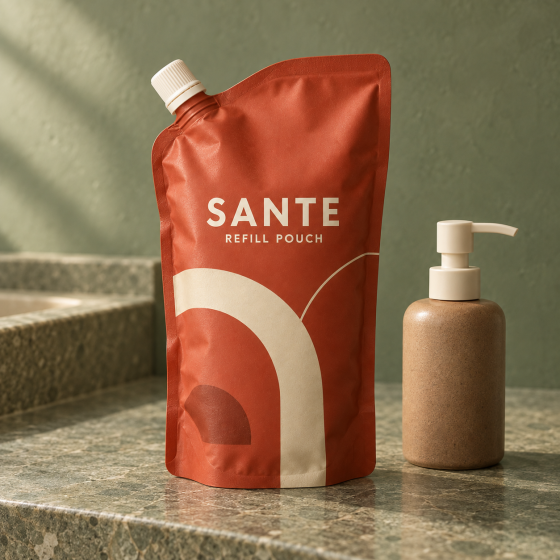
For spout pouches, review the grip, pouring control and cap operation with a filled sample. Confirm that the cap belongs to the proposed spout design.
A zipper that closes comfortably is useful, but it does not prove a retail food package has the required final seal. Likewise, an easy-to-turn cap does not establish leak resistance. Functional checks and appropriate performance tests answer different questions.
4. Run a trial with your filling and sealing equipment
Give samples to the people who will pack the product. A pouch that is convenient to fill by hand may behave differently on a production line.
Check whether the equipment can hold, open and move the pouch without damage. During sealing, keep product residue and wrinkles out of the seal area. Ask for recommended starting settings, then establish suitable settings on your own equipment and the proposed film.
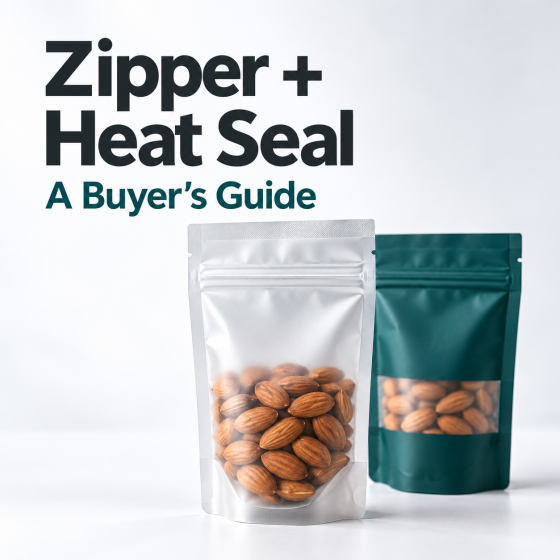
Agree on suitable seal-strength, leak or other integrity checks with the supplier and packer. A smooth-looking seal or one successful squeeze test cannot demonstrate complete package performance. Our zipper and heat-sealing guide explains why the closure and final seal should be reviewed separately.
5. Check artwork on the filled pouch
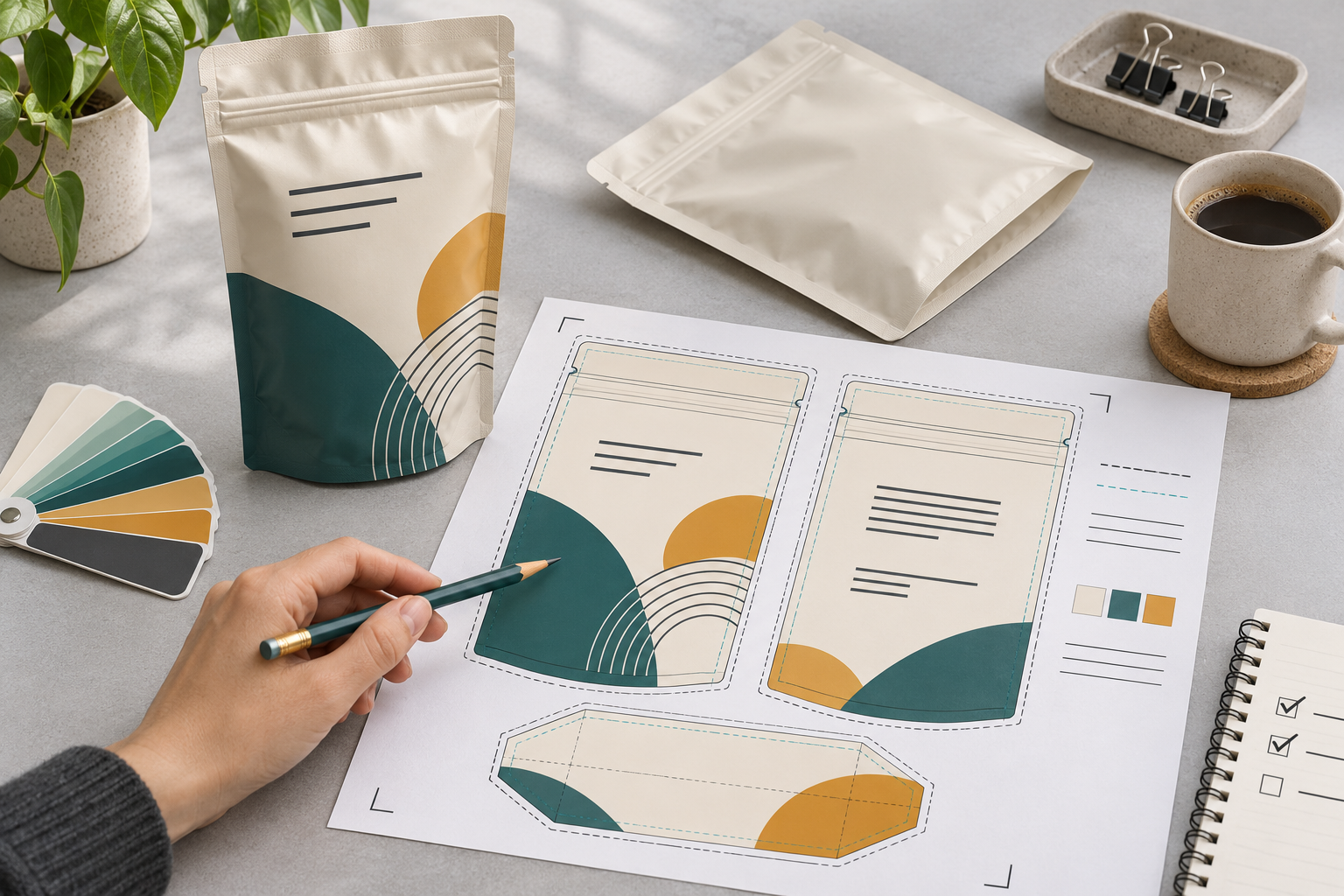
Read the brand name, product name, quantité, instructions and contact details. Check every product version separately: it is easy to approve one design while missing a different weight or flavor on another.
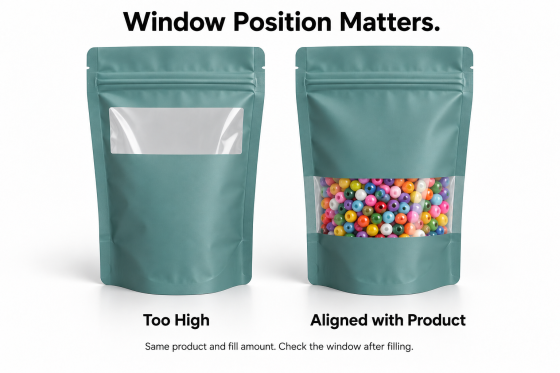
Review where the artwork sits after filling. Important text should not disappear into a fold, sit across a seal or be removed when the header is torn off. Check the window position against the actual product level.
Try barcodes and QR codes on a representative finished pack, using the intended reading conditions where possible. Gloss, contrast, folds and positioning can affect readability.
Discuss how color will be approved. A phone screen or ordinary paper print is not a reliable color target for printed film. Ask which physical reference or production proof will be used, and confirm the matte or glossy finish.
6. Review the filled pack in storage and shipping
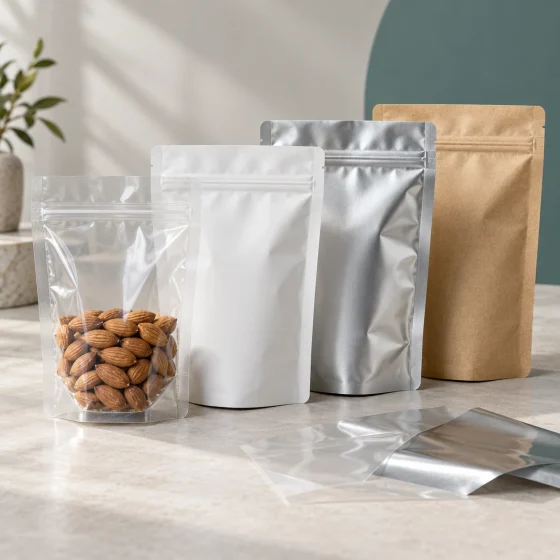
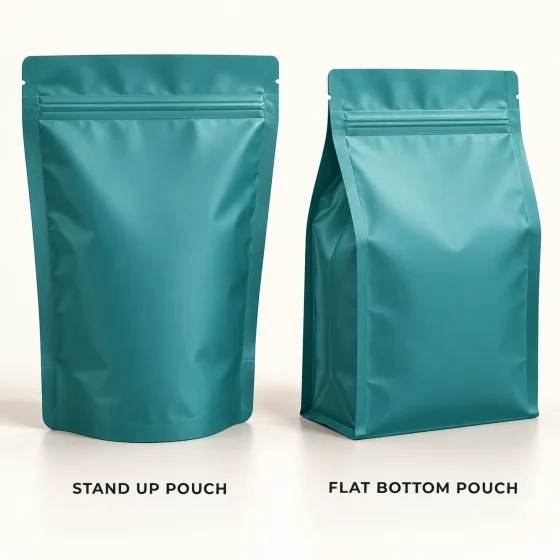
Put filled samples into the intended carton. Check fit, packing arrangement and whether protruding parts rub against neighboring packs. For a stand-up format, test the filled bag on the shelf surface where it will be displayed.
Agree on storage and transport checks that reflect your product and distribution route. Record the conditions, duration, sample identification and results. Where formal testing is needed, ask the supplier or a suitable testing provider to define the method and acceptance criteria.
Do not turn a short sample review into an unsupported shelf-life claim. Material compatibility, barrier performance and product shelf life may require separate evidence. For food use, also request the relevant documentation for the intended market and conditions.
A simple approval checklist
| Review item | What to record |
|---|---|
| Product fit | Actual fill quantity, usable space and filled photos |
| Dimensions and features | Drawing version, measurements, closure and seal positions |
| Filling and closing | Equipment, trial conditions and agreed test results |
| Printing | Artwork version, color reference and code readability |
| Final specification | Matériel, dimensions, finish, features and any remaining changes |
How to give useful feedback to the supplier
Send one consolidated list with photos and measurements. Separate what you approve from what needs changing. For example: “The width works, but the filled product reaches the zipper. Please propose more usable height while keeping the same closure.”
Ask for a revised drawing and confirm whether the change requires another sample or trial. Keep an identified approved sample together with the final artwork and written specification. Do not rely on a message saying only “looks good.”
Frequently asked questions
Can I approve a bulk order from photos alone?
Photos help review appearance. They cannot show filling convenience, material feel, closure performance or equipment compatibility. Decide which physical samples and tests are needed for your application.
Does a blank sample prove the printed bag will perform the same?
Only if the relevant construction and features are representative and the required checks support that conclusion. Ask what differs between the sample and the bulk specification.
How many samples should I test?
Agree on a quantity that suits the checks and risk involved. One bag may help visualize a shape, but it cannot establish consistent production performance.
Planning a custom pouch order?
Send Sante Packaging your product photo, filling quantity, preferred bag style and packing method. Tell us what you want the sample to confirm so we can discuss suitable sample options and the specification to review before production.
Messagerie électronique: baobor@sante.cn | WhatsApp: +86 13590454892
Technical background: product/package compatibility and pouch testing. The checks above are a buyer review guide; test methods and acceptance criteria should be agreed for the specific package.