 Groupe Sante

Spout pouches are flexible bags with a pouring spout and a cap. They can be considered for products such as sauces, drinks, gels and liquid refills, provided the pouch, closure and filling process are suitable for the contents.
To choose a spout pouch, start with what you will pack and how you will fill it. Then decide on capacity, spout position, opening size and material. Two bags that look almost identical may perform very differently with your product.
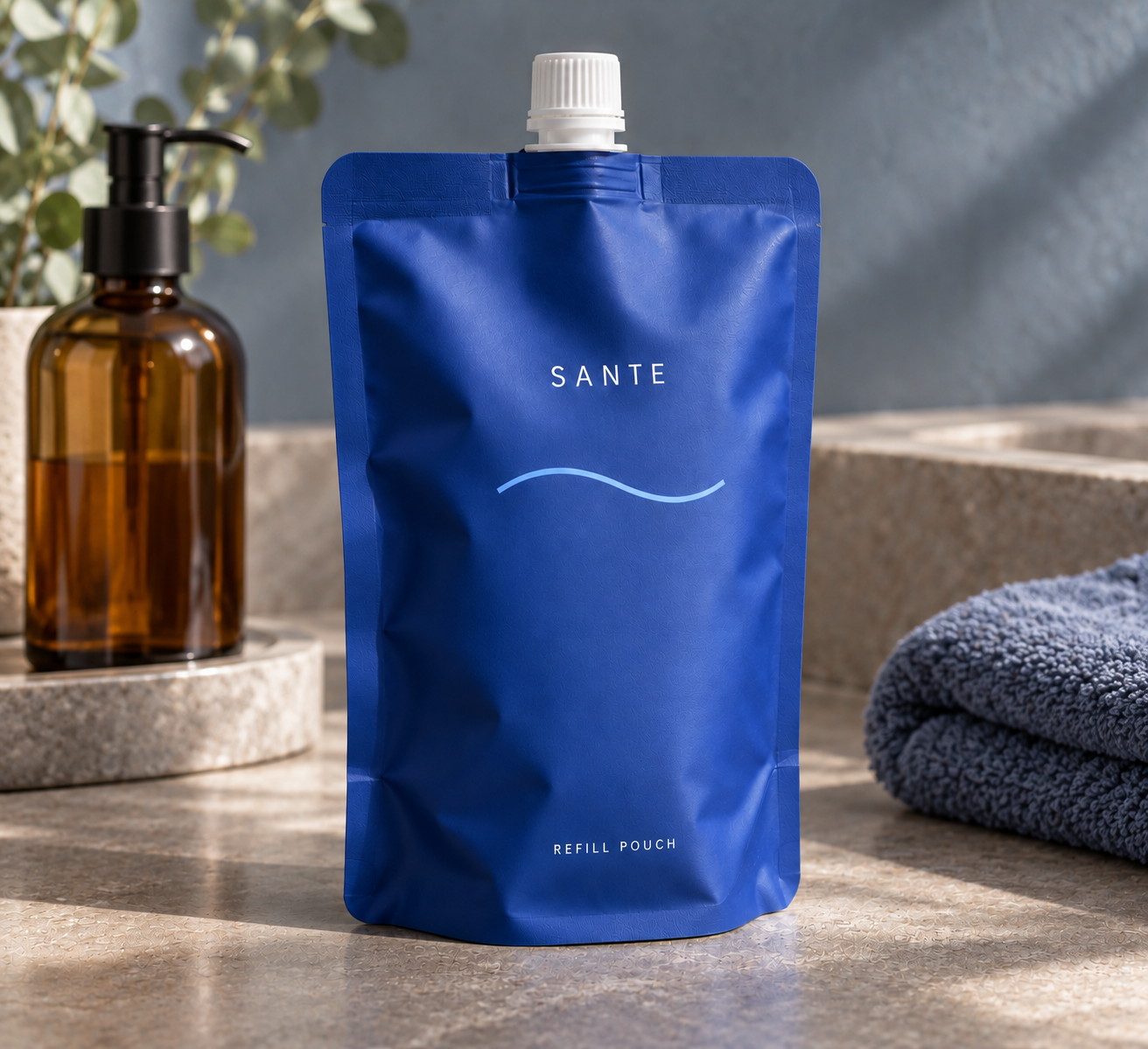
1. Explain what will go inside the pouch
The product description is more useful than a bag photo alone. A watery liquid, a thick sauce and a foaming detergent need different checks, even when the filling volume is the same.
Tell your supplier:
- What the product is: alimentation, a personal care product or another liquid.
- How it flows: thin like water, thick like shampoo, or containing pulp or small pieces.
- How it is packed: the filling temperature and any heating or cooling after filling.
- How it is stored: at room temperature, chilled or frozen, and for how long.
If you use a contract packer, ask them to review the proposed pouch before placing an order. Their equipment may set limits on pouch dimensions, spout position and cap design.
2. Confirm the working capacity, not just the bag size
Start with the amount you intend to sell in each pack. If the label says 500 mL, ask for a pouch suitable for that actual fill, with the space needed by your product and process.
A pouch’s maximum possible volume is not necessarily its recommended filling volume. Space above the liquid, often called headspace, may be needed for filling, closing and handling. The amount should be agreed for the application rather than guessed from a photo.
Ask for a filled sample or carry out a filling trial. Check whether the pouch stands as intended, can be held comfortably and fits your shipping carton. Also check the pack after it has been capped. A bag stretched tight at its maximum capacity may be awkward to use.
If you sell by weight, share both the target weight and information about the product’s density. Grams and milliliters are not interchangeable for every liquid.
3. Choose the spout position with the user and filling line in mind
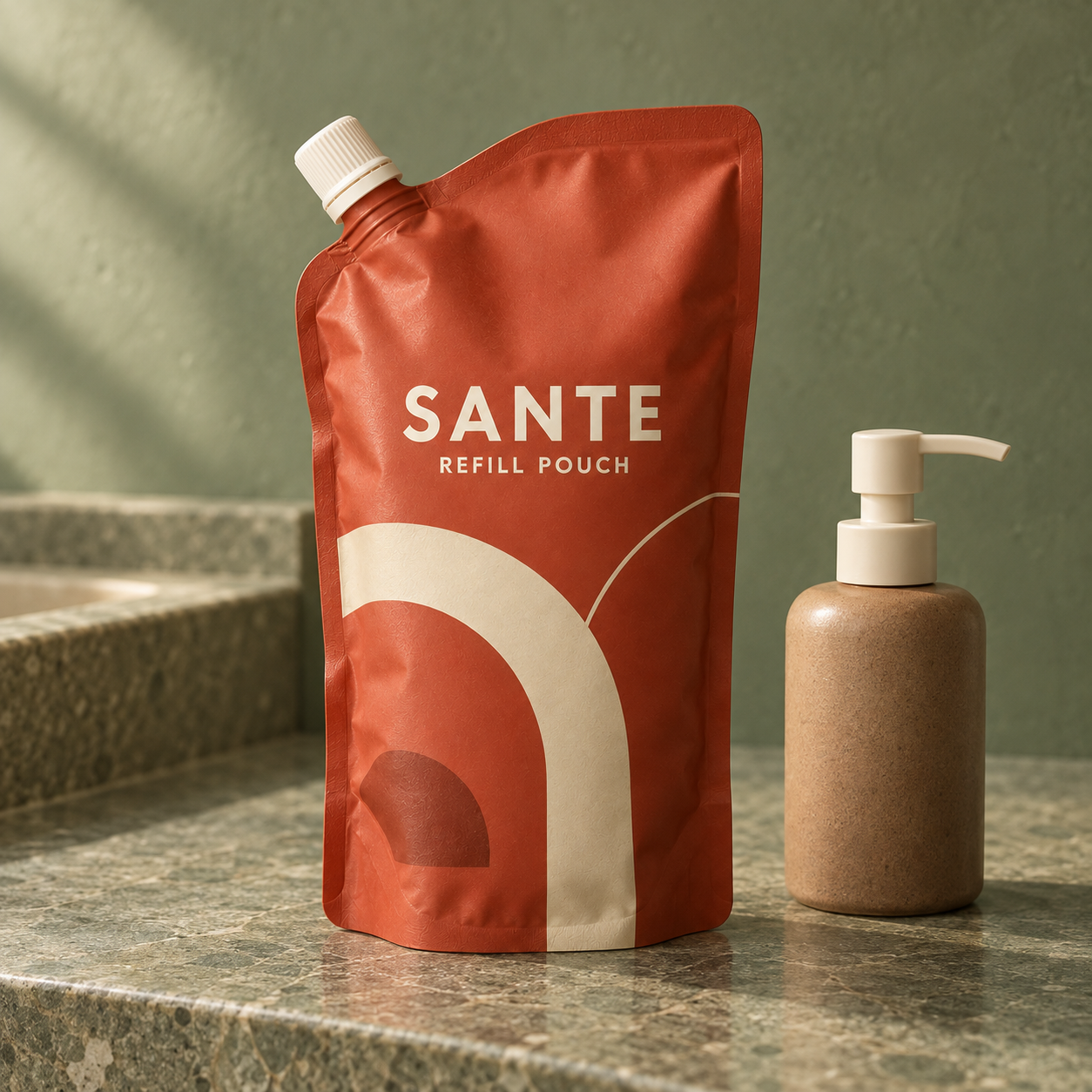
Top-center and corner spouts are both common. There is no single best position for every product. Compare how the customer will hold and pour the pouch, then confirm what your filling equipment can handle.
| Spout position | What to check |
|---|---|
| Top center | How the pouch is held for filling and dispensing, plus space around the neck and cap. |
| Corner | Pouring angle, grip and whether the filling line supports the angled spout. |
Try a filled sample rather than deciding from the empty bag. A position that looks attractive in the artwork may feel different when the pouch is full. Show the supplier which side customers should grip and where you want the main printed panel.
4. Match the opening and cap to the contents
The size that matters for product flow is the usable opening inside the spout. The outside cap size does not tell you how much room is available for a filling nozzle or for the liquid to pass through.
A thick product or one containing small pieces needs particular attention. Ask the supplier and filler to check the opening against the product, nozzle and required filling rate. A larger opening is not automatically better: customers still need to control the pour and close the pack easily.
Confirm the cap and spout as a matched set. Ask whether tamper evidence is required, how the cap will be applied and what checks will be used to confirm closure performance. Tightening a cap as hard as possible is not a reliable substitute for the correct application setting.
For products intended for children, discuss the relevant closure and safety requirements separately. A standard screw cap should not be described as child-resistant without supporting evidence.
5. Select material for the product and storage conditions
Do not choose the film only by color, thickness or a description such as “silver pouch.” Ask for the material structure and why it suits the intended liquid.
The review should cover protection from oxygen, moisture or light where needed, resistance to handling damage, and compatibility with the contents. Oils, fragrances and cleaning formulations can create different compatibility questions from water-based food products.
The film, spout and cap need to work together. A strong bag body will not solve a poorly matched spout seal. Ask for samples made with the proposed construction, not just a display sample in a similar color.
For food use, request relevant food-contact documentation for the intended market and conditions of use. Hot filling, freezing and retort processing require suitable specifications and validation. Do not assume an ordinary liquid pouch is suitable for all three.
6. Confirm the filling route before ordering
Two common arrangements are filling through the spout and filling through an open pouch edge. The pouch must arrive in a condition that matches the chosen process.
- Through the spout: product enters through the installed spout, then the cap is applied. The nozzle, spout opening and pouch handling system need to match.
- Through an open edge: product enters through an unsealed opening, which is sealed after filling. The design must leave suitable access and a clean area for the final seal.
Do not assume you can switch between these routes after the pouches arrive. Ask the filler to approve a drawing showing the filling opening, spout position and final closure. If the equipment uses rails or special holders, provide the relevant spout dimensions as well.
7. Run a small filled-pouch trial
Before approving a full production order, test samples with the actual product and intended filling process. A water trial can help check basic handling, but it does not establish compatibility or shelf life for a different liquid.
Review these points with the supplier and filler:
- Can the pouch be filled and closed consistently without product residue interfering with seals or closure surfaces?
- Does the filled pack show leakage around the cap, spout attachment or bag seals?
- Can a customer open, pour and reclose it comfortably?
- Does the pack remain acceptable after agreed storage and transport checks?
Agree on test methods and acceptance criteria for your application. A single squeeze test or a neat-looking seal is not enough to prove long-term package performance.
What should you send for a spout pouch quote?
A clear inquiry helps the supplier recommend a specification and quote the right item. Include:
- Product name, a short description and a photo.
- Target filling volume or weight per pouch.
- Preferred pouch dimensions, or a reference sample if available.
- Top-center or corner spout preference, and any known cap or opening requirements.
- Filling method, equipment model and filling temperature.
- Storage conditions and target shelf life.
- Order quantity, printing artwork and delivery destination.
If you do not know the pouch size or spout diameter yet, say so. Your product and process information is a better starting point than guessing a specification. Confirm the minimum order quantity and lead time for the final design.
Frequently asked questions
Can one spout pouch be used for both food and detergent?
Do not assume so. The material, closure and compatibility checks must match the contents. Food use also requires the relevant supporting documentation.
Are corner spouts better than top-center spouts?
Neither is always better. Compare pouring and handling with a filled sample, then confirm compatibility with your filling equipment.
Can I fill a spout pouch with hot liquid?
Only use a pouch and closure specified for the actual filling temperature and subsequent process. Confirm the construction and run an appropriate trial before production.
Can the bag size be chosen from volume alone?
Volume gives a starting point. The pouch shape, required headspace, filling method, spout and intended handling also need to be considered.
Discuss your spout pouch with Sante Packaging
Explore our spout pouch range, including top-center spout et corner spout examples. Send your product details, target filling quantity and filling method so we can discuss suitable options and the samples needed for your trial.
Messagerie électronique: baobor@sante.cn | WhatsApp: +86 13590454892
Further reading: Linapack’s explanation of fill-and-seal and fill-and-cap processes. Images illustrate pouch designs; suitability depends on the agreed material, closure and application.